360° feedback that
actually feeds the review.
Anonymous-at-write peer feedback. Themes aggregated across raters. Contradictions surfaced where peers say one thing and reports say another. Feeds the AI review draft as a cited source — not a 12-page PDF nobody opens.
Summarize the peer feedback for Sarah this cycle — and flag anything the report-feedback disagrees with.
AI
Peer feedback (7 raters): top themes are ownership, technical rigor, and reliable follow-through. One open theme: “sometimes hard to read in async — long silences before responses.”
AI
Contradiction with reports (4 raters): reports describe Sarah as highly accessible and responsive. The async-communication concern is a peer-only signal — worth probing in her 1:1 rather than embedding in the review.
Show me a representative quote on the ownership theme.
AI
Anonymized peer quote: “When the migration project hit the legal block in March, Sarah didn't escalate — she rebuilt the dependency plan herself over a weekend and we hit the deadline.” Three of seven peers raised this incident as a defining moment for the cycle.
Real anonymity, not just hidden columns.
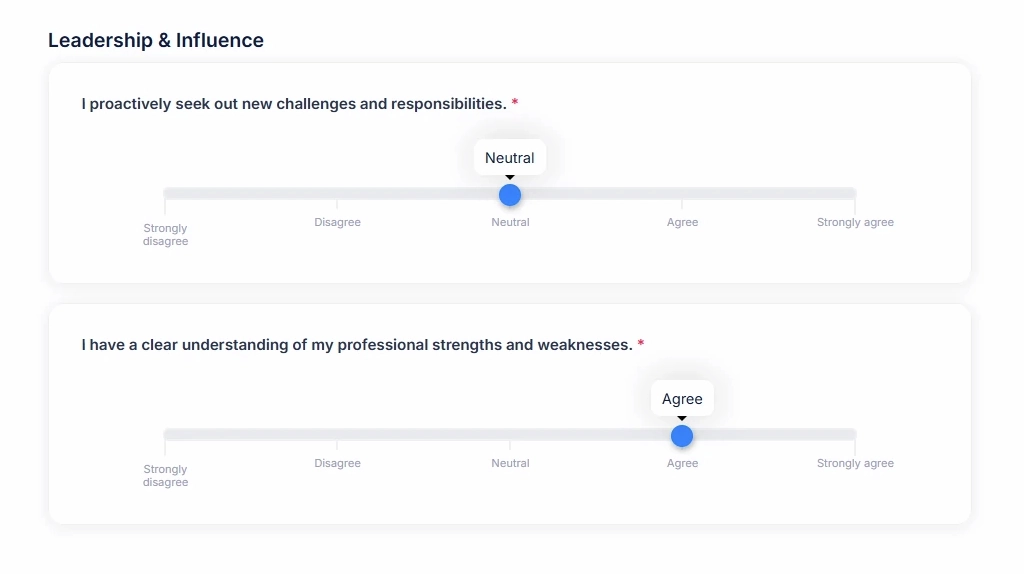
Peer feedback is sensitive — the architecture treats it that way:
- Anonymous-at-write: rater identity stripped on submission, not hidden in the UI
- Cohort minimum sizes enforced before any rater-group view (e.g. ≥3 peers before themes display)
- Cell suppression on cross-rater views — no “only one peer said this” reveals
- Attributed mode available for supervisor feedback (where attribution is expected)
- Right-to-delete honored at the response level — withdrawal removes the rater's contribution from the synthesis
Themes, not transcripts.
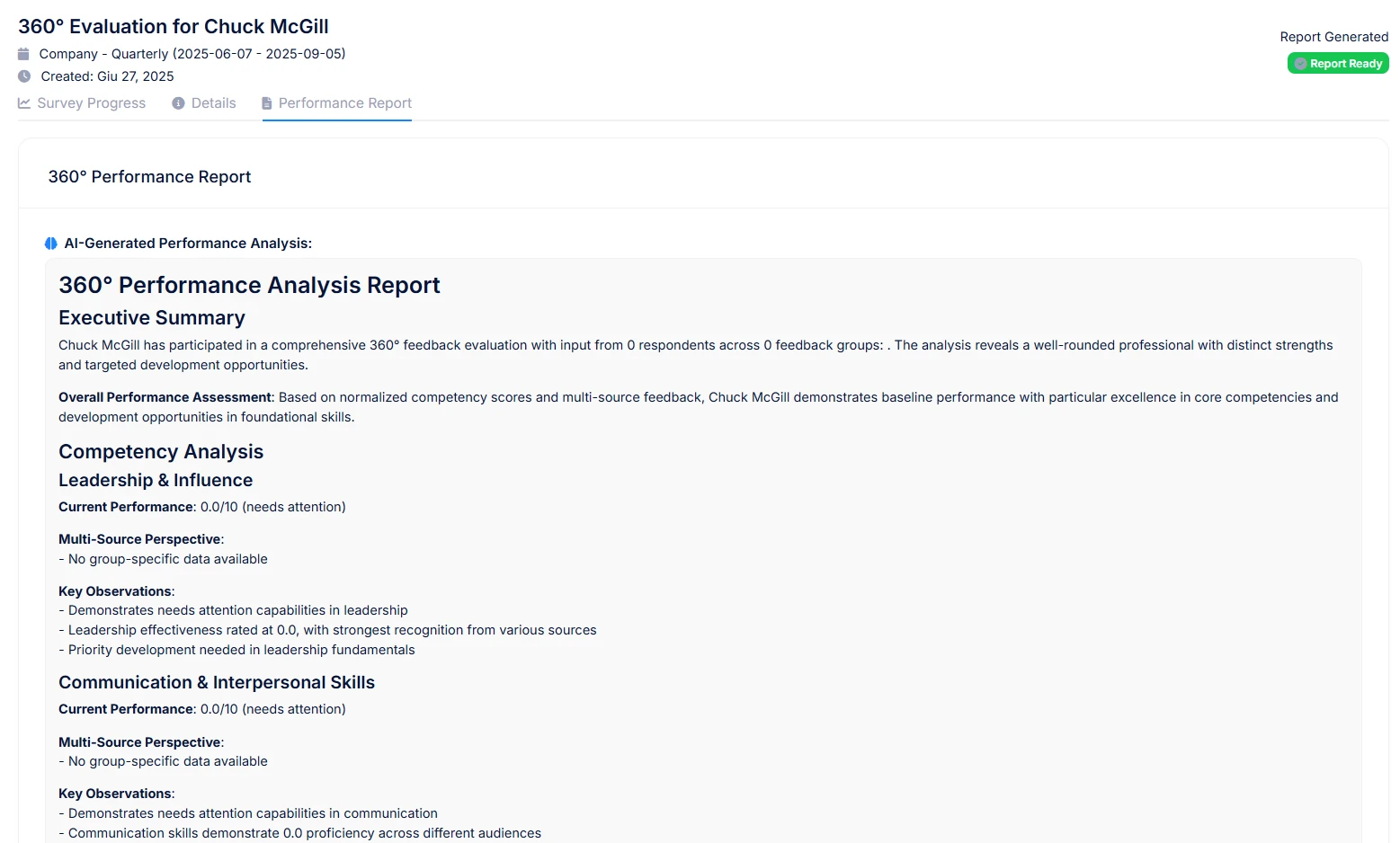
What the manager actually opens is the synthesis, not the raw responses:
- Top themes ranked by frequency across rater groups
- Illustrative quotes — anonymized, with cohort size shown
- Sentiment direction (positive / neutral / developmental) per theme
- Contradictions surfaced where peers and reports disagree — flagged for the 1:1, not for the review
- Trends across cycles — see whether a recurring theme actually moved after last cycle's commitment
Feeds the AI review draft.
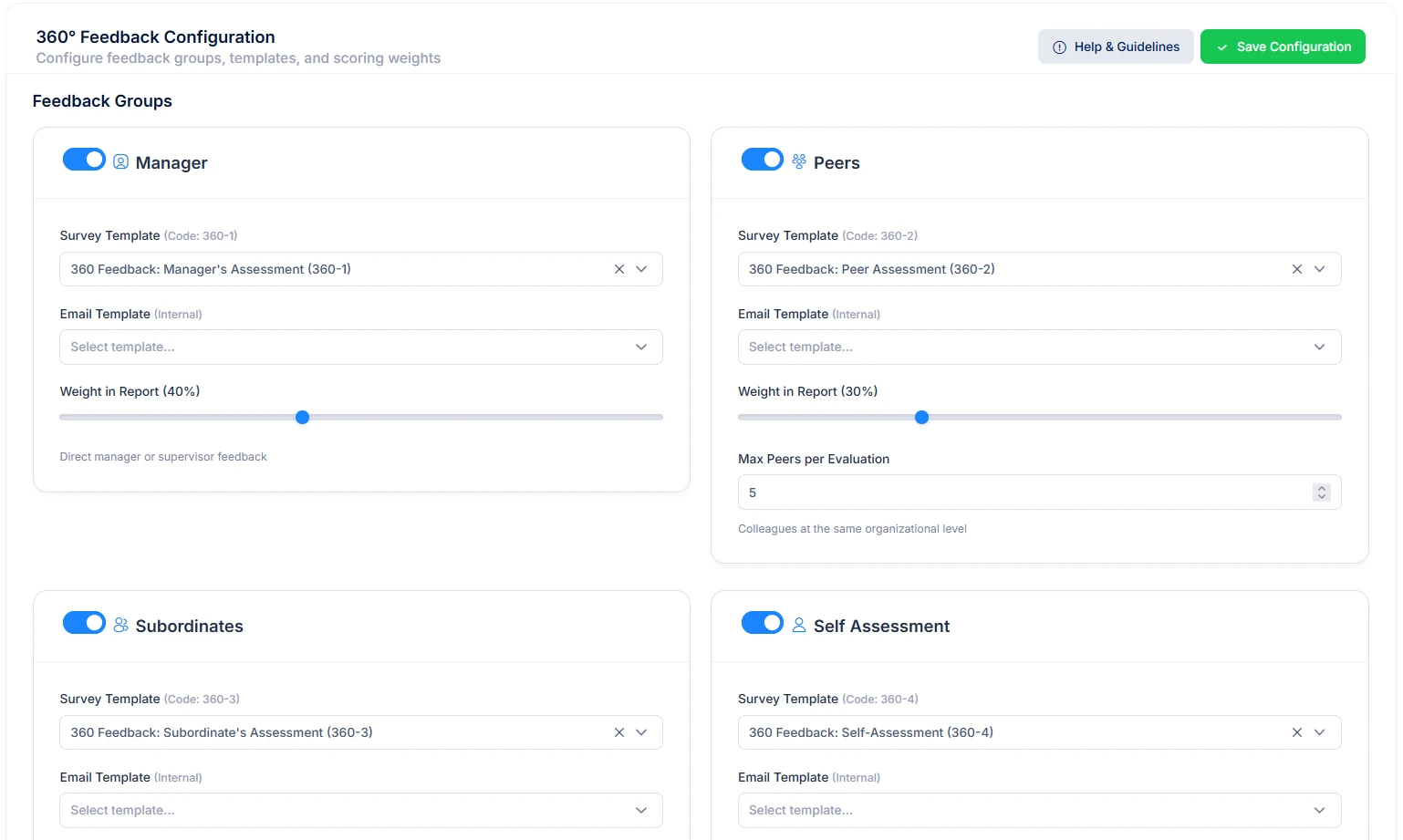
360° doesn't sit in a separate PDF — it's a cited source for the performance evaluation:
- Themes appear in the AI-drafted review as cited evidence — manager can click through to verify
- Performance cycles tie 360° themes to OKR outcomes, so feedback isn't divorced from delivery
- Calibration committees see anonymized theme aggregates across the cohort, not individual reports
- Same engine drives leadership 360°, peer-only programs, and supervisor-only reviews
- Per-rater group thresholds: see manager view only if 4+ peer raters, etc.
Where 360° actually pays off.
Programs where the multi-source view is the point — not a checkbox on the annual cycle.
- Leadership 360°
- Manager Effectiveness
- Promotion Cases
- High-Potential Validation
- Cross-Functional Reviews
- Calibration Committees
- Coaching Development Plan
- New-Manager Check
- Cycle-Over-Cycle Trend
- Behavioral Anchor Validation
- Contradiction Surfacing
- Succession Read-Out
- Anonymous Pulse Themes
- Works-Council Compatible
- Self-Awareness Coaching
Start Now
For any request, please contact us
360° Feedback FAQ
What HR, managers, and reviewees ask first.
How anonymous is peer feedback really?
Identity stripped at write — the database never stores rater ID for anonymous-mode responses. Cohort minimums enforced before any rater-group view displays. Cell suppression on cross-views. No technical path to deanonymize.
What's different from a traditional 360° report?
The synthesis is what lands — not the raw responses. Themes ranked, sentiment direction tagged, contradictions across rater groups surfaced. And it feeds the AI review draft as a cited source, so the feedback actually shapes the evaluation instead of sitting in a separate PDF.
Can the reviewee see their own feedback?
Once their manager releases it. The view they get is the same themed synthesis — anonymized quotes, sentiment, contradictions. They can add a written response that becomes part of the cycle record.
Can we customize the behavioral anchors?
Yes. Define your own competencies, behaviors, rating scales. The AI synthesis adapts its grouping and phrasing to whatever anchors you set — it doesn't assume a fixed taxonomy.
What rater groups are supported?
Supervisor, peers, direct reports, cross-functional collaborators, customers — any group you define. Per-group thresholds: e.g., display the peer view only when 4+ raters submitted.
Is there a dedicated 360° plan?
Yes — see the 360° Unlimited plan for organizations that primarily need multi-rater feedback. The plan ships with org structure, customizable surveys, and an AI-credit allowance sized for cycle-based usage.
Want a walkthrough on your competency model?
Contact Sales