Map the expertise.
Then capture what it knows.
Peer-validated competency network + AI expert interviews + three-phase extraction pipeline + semantic comparison across experts. Knowledge Mapping is the institutional memory layer that captures who knows what, how they actually do it, and reconciles it across the org, with every decision reversible.
Who knows what, validated before documentation begins.
The system starts with the competency map, not the document. Self-claims and manager nominations flow through a four-verdict peer validation network. Only validated competencies trigger an expert interview.
- Five-verdict validation: Confirmed · Disagree · Not familiar · “Anche Io” (I have it too) · “Shared Others” (nominate a colleague). The shape of the network maps shared expertise without requiring a survey.
- Threshold-based promotion: candidate → validated experience only after configurable confirmations. No expert interview wasted on a claim peers reject.
- Cross-pollination via Anche Io: when a peer flags they also have the competency, the system spawns a parallel expert interview, capturing variants of the same process from multiple sources.
- Scope-aware distribution: validation requests routed by organization element, project, or global, peers are chosen for expertise proximity, not org-chart proximity.
Tacit expertise extracted by a conversational AI, no form to fill.
Once a competency is validated, the system invites the expert to an adaptive chat. The interview agent decides what to probe and when the process has been captured with all critical details, no fixed length, no fixed script.
- Adaptive questioning: the agent reads each answer and picks the next question, probing specifics (names, channels, timing) where the answer is vague.
- Completion detection: the agent decides when the process has the steps, stakeholders, tools, and timing needed for downstream extraction, and not before.
- Real-time streaming: SSE-based session, full conversation history persisted, recoverable across sessions.
- Context-aware: the agent receives expert role, organization, project, and the competency context, not a blank slate.
- Multilingual capture: expert interviews in the contributor's preferred language; downstream retrieval works across languages.
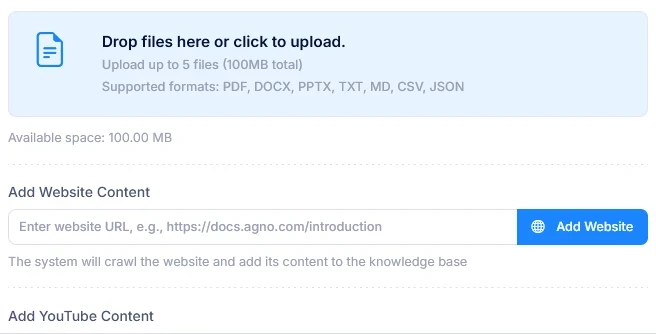
Three phases. Conversation in, structured knowledge out.
Every completed interview runs through three specialized LLM agents in sequence, orchestrated as Celery tasks so the UI never blocks. Output is a structured Process with steps, stakeholders, tools, timing, and a completeness score.
- Phase 1 · Reordering: the Reordering Agent rewrites the chat into a chronological narrative, stripping chitchat and meta-talk. Output: a clean linear text the next phase can parse deterministically.
- Phase 2 · Extraction: the Extraction Agent emits structured data: process name, description, ordered steps, stakeholders (name, role, contact channel, timing), tools, overall timeline.
- Phase 3 · Validation: the Validation Agent computes a 0–1 completeness score and flags only critical gaps (external stakeholders, critical tools, timing for high-impact steps). Below 0.75, the interview is flagged for follow-up.
- Smart noise filtering: tools like “discuss” or “review” are not flagged. Internal team contacts are not flagged. Only material gaps surface.
- Audit trail: every LLM call is logged (model, prompt, response, tokens) for compliance review.

When two experts document the same process, the system reconciles them.
Once two or more experts have documented processes in the same context, a semantic comparison agent runs automatically. It identifies shared steps, unique contributions, and conflicts, then routes the result through a three-band decision logic.
- Similarity > 0.95: creates a Manager Approval request. A merge is never automatic; the comparison goes to the campaign creator with shared / unique steps and the agent's reasoning. The manager approves into a shared process, or keeps separate.
- Similarity 0.4–0.95: marked as partial match. Both processes coexist; the context is tagged for incremental review.
- Similarity < 0.4: flagged for human review. The two experts likely describe different processes that happened to share a competency label.
- Reasoning with real names: the comparison report uses the actual expert names (“Marco's escalation step”, not “Expert 1”), making decisions readable across the management chain.
- Conflict surfacing: where steps contradict (Marco says “escalate via Slack”, Sofia says “via email”), the agent flags the conflict instead of silently picking one.
- SHARED Page secondary on-call via PagerDuty if primary doesn't ack in 5 min
- MARCO Escalate to EM directly via #incident-eng Slack, not email
- SHARED Acknowledge in StatusPage within 10 min of detection
- SOFIA Open #cust-XYZ-incident channel for enterprise-tier customers
A searchable knowledge base, with an undo button on every decision.
The output is a knowledge base of documented processes, searchable, filterable, drill-down to chronological narrative + stakeholders + tools + timing. Every operation is soft-delete: the audit trail survives every merge, every undo, every refresh.
- Server-side DataTables: fast search and filter even at thousands of documented processes. Drill from row to the full process detail.
- Completeness score visible per process: 0–1 score from Phase 3 validation, with the missing-info list. Knowledge gaps are explicit, not hidden.
- Reversible merges: a manager-approved merge can be undone in one click. Original processes restored, shared process archived, audit trail preserved on both sides.
- Soft delete on everything: archived data stays queryable for audit (GDPR Article 30, ISO 27001 evidence). Restore is a state change, not a backup recovery.
- Three-tier access model: Owner / App Manager / Campaign Creator see the full pipeline; regular users see only their own overview and pending actions (validations, expert interviews, approvals).
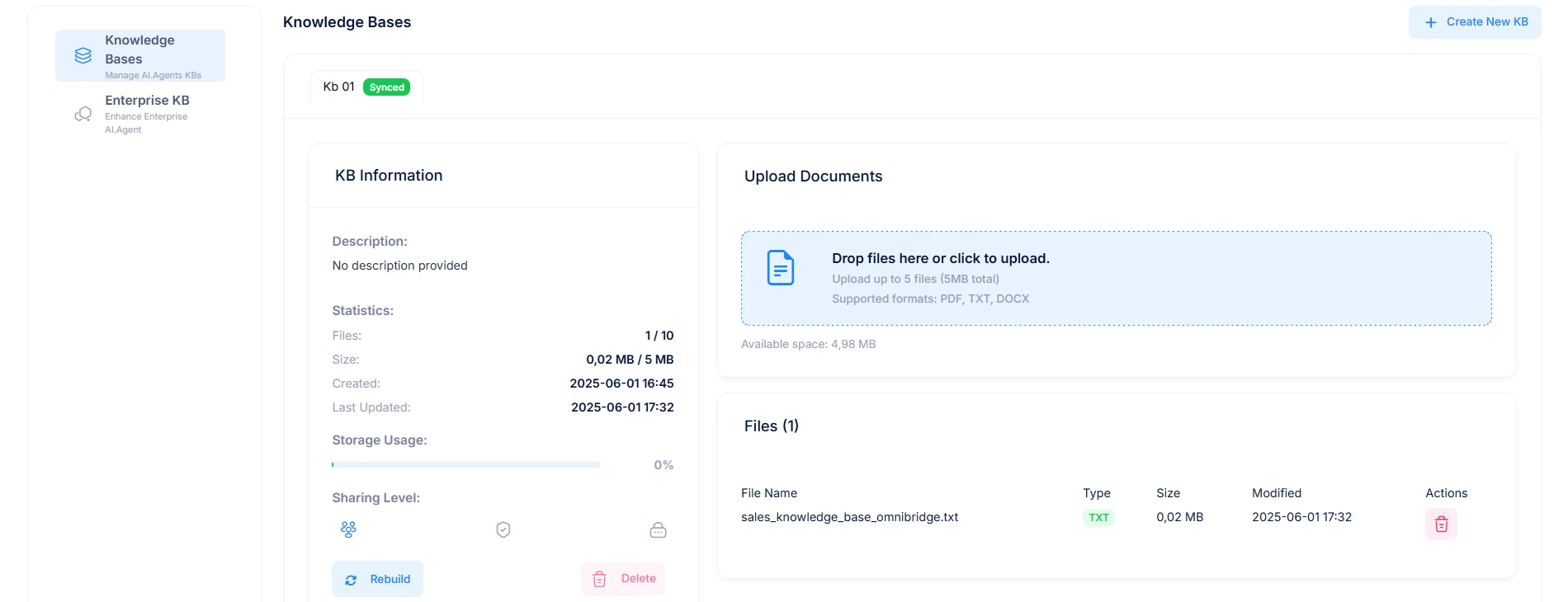
The captured knowledge feeds every agent on the platform.
Knowledge Mapping is the source, not the destination. The validated, documented, deduplicated knowledge base becomes the retrieval substrate for the rest of the platform: chatbots, onboarding agents, strategic analysts.
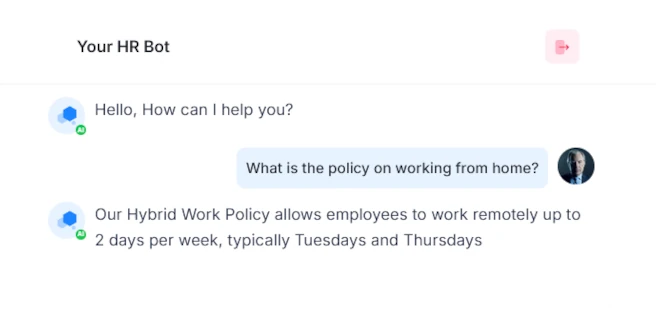
- Chatbot Assistants cite back to the original expert interview that captured the answer.
- Onboarding agents serve new-hire questions from validated processes instead of generic FAQs.
- Internal handovers hand a structured brief to the incoming owner, not a Loom link.
- Need-to-know scope on every asset. Each captured asset carries a confidentiality scope (organization unit, project, or private to the author), so retrieval can be limited to who is cleared to see it.
- Right-to-delete honored at expert level: an erasure request soft-deletes the contributions; the merged process remains with the expert's identifiable contributions stripped from the trail, and the erasure event is logged.
Where knowledge mapping pays off.
- Critical Knowledge Preservation
- Retirement & Succession Risk
- Founder-Era Knowledge Capture
- Single-Point-of-Failure Audit
- Operational Resilience
- Process Standardization (Multi-Site)
- Best-Practice Identification
- Cross-Team Variant Reconciliation
- M&A Knowledge Integration
- Customer-Escalation Playbook
- New-Hire Onboarding KB
- Incident-Response Runbook
- Structured Mentoring Programs
- Failed-Project Lessons
- Quarterly Refresh Cycle
